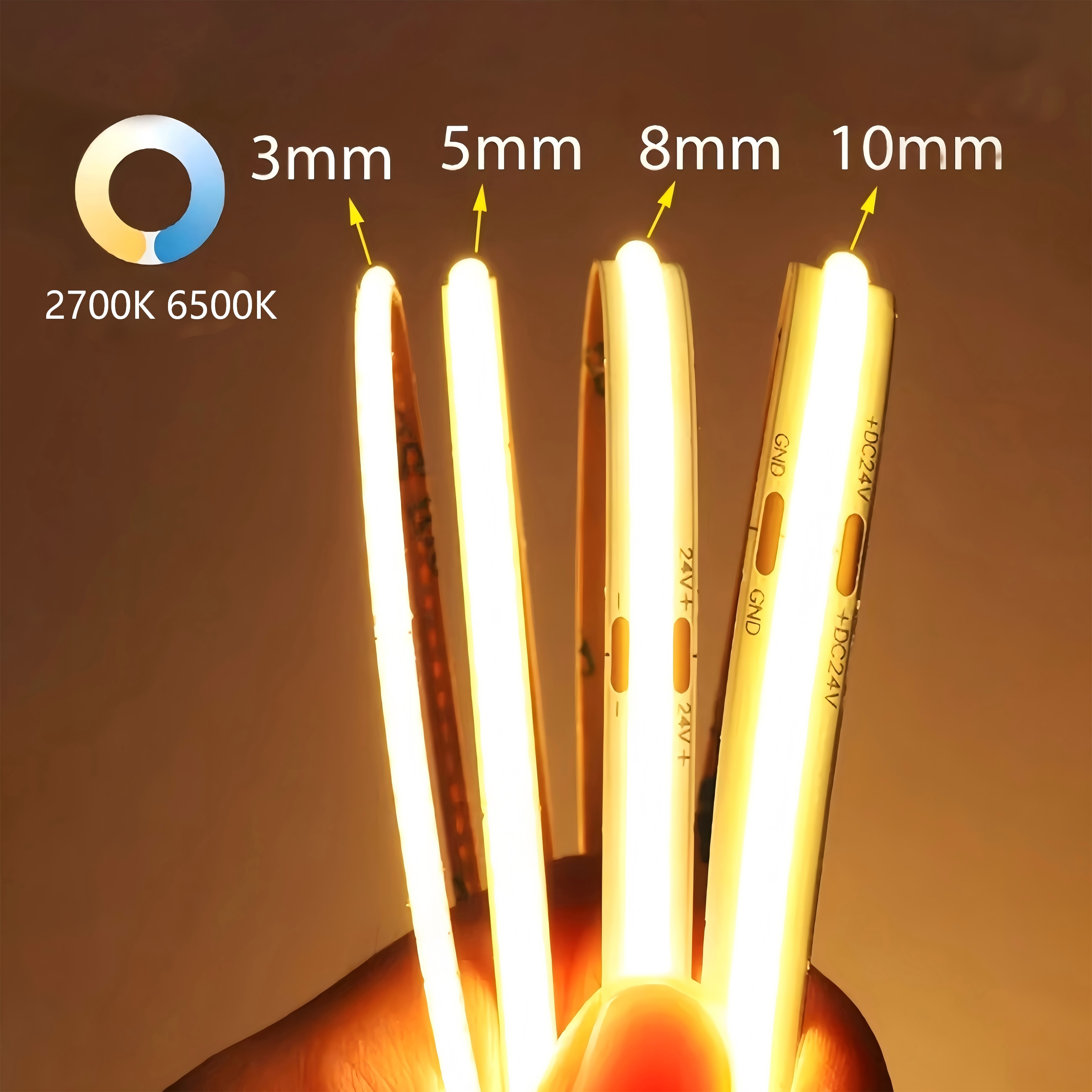
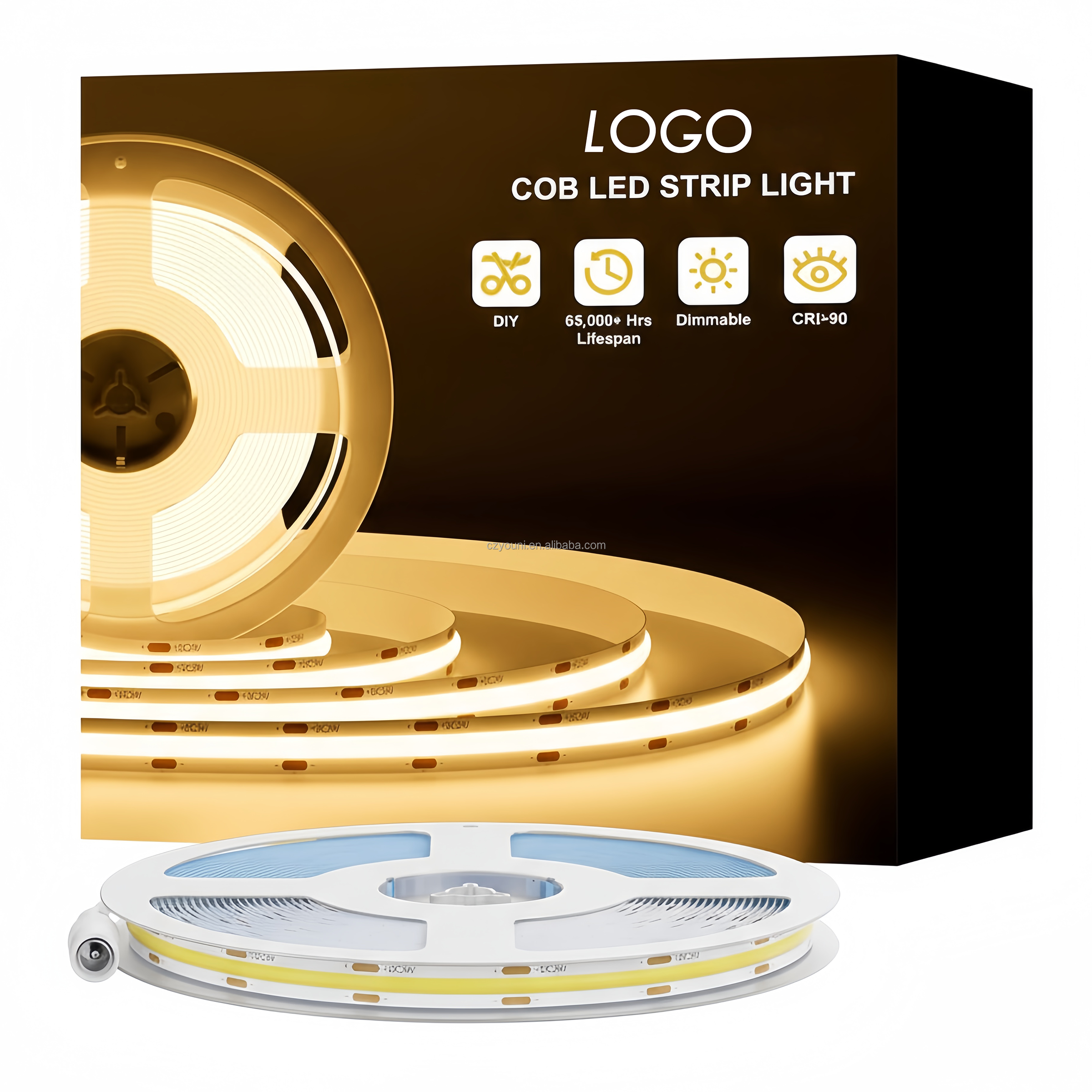
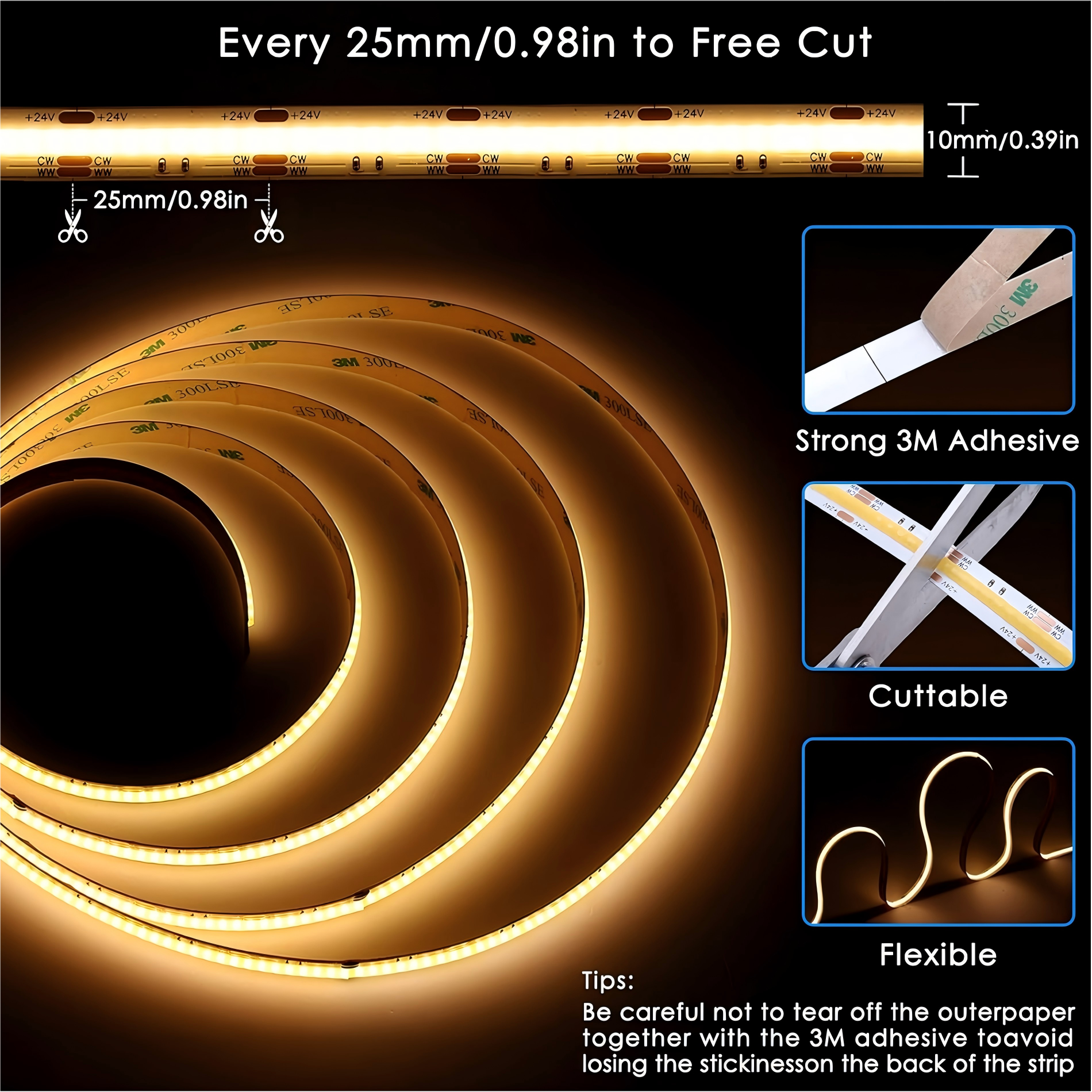
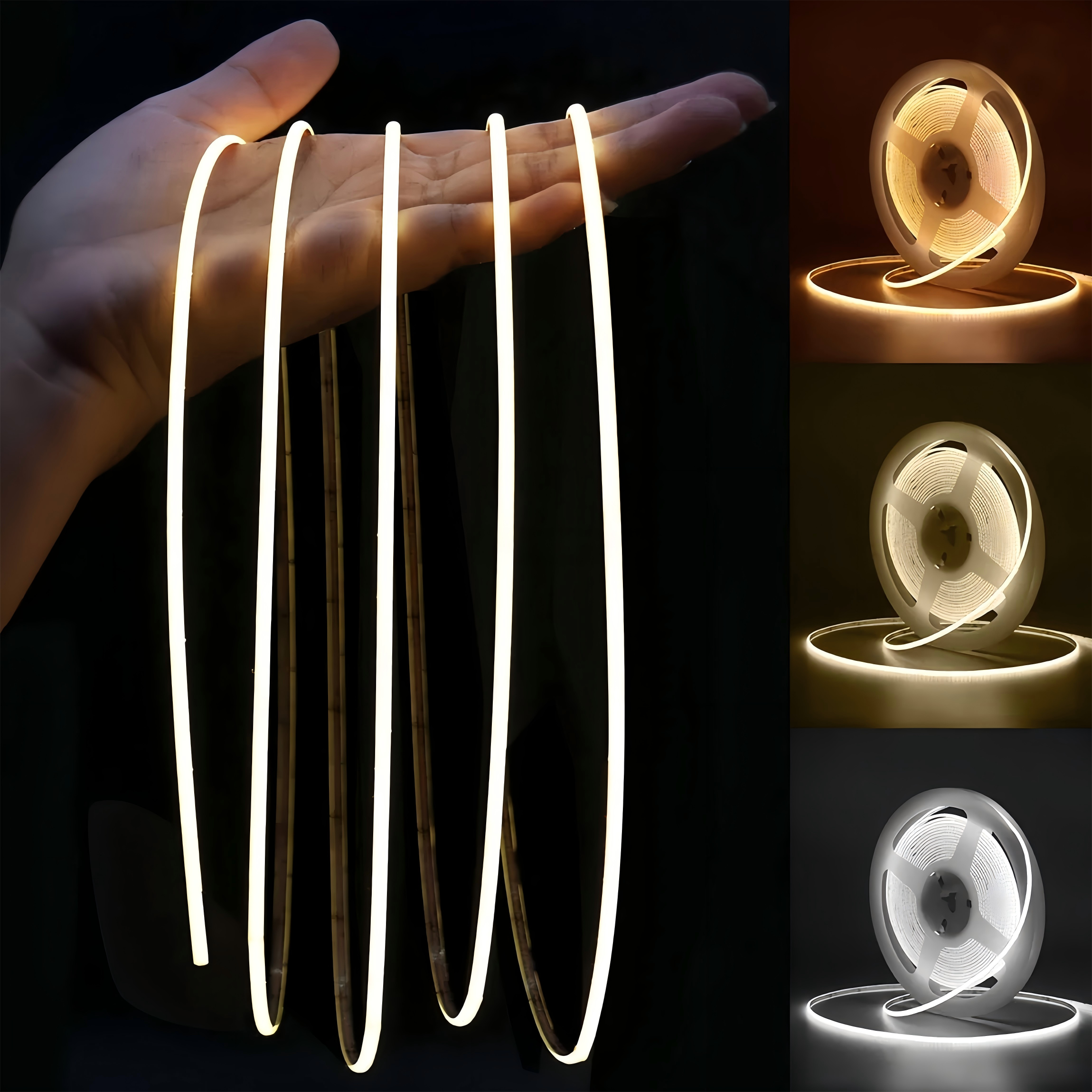

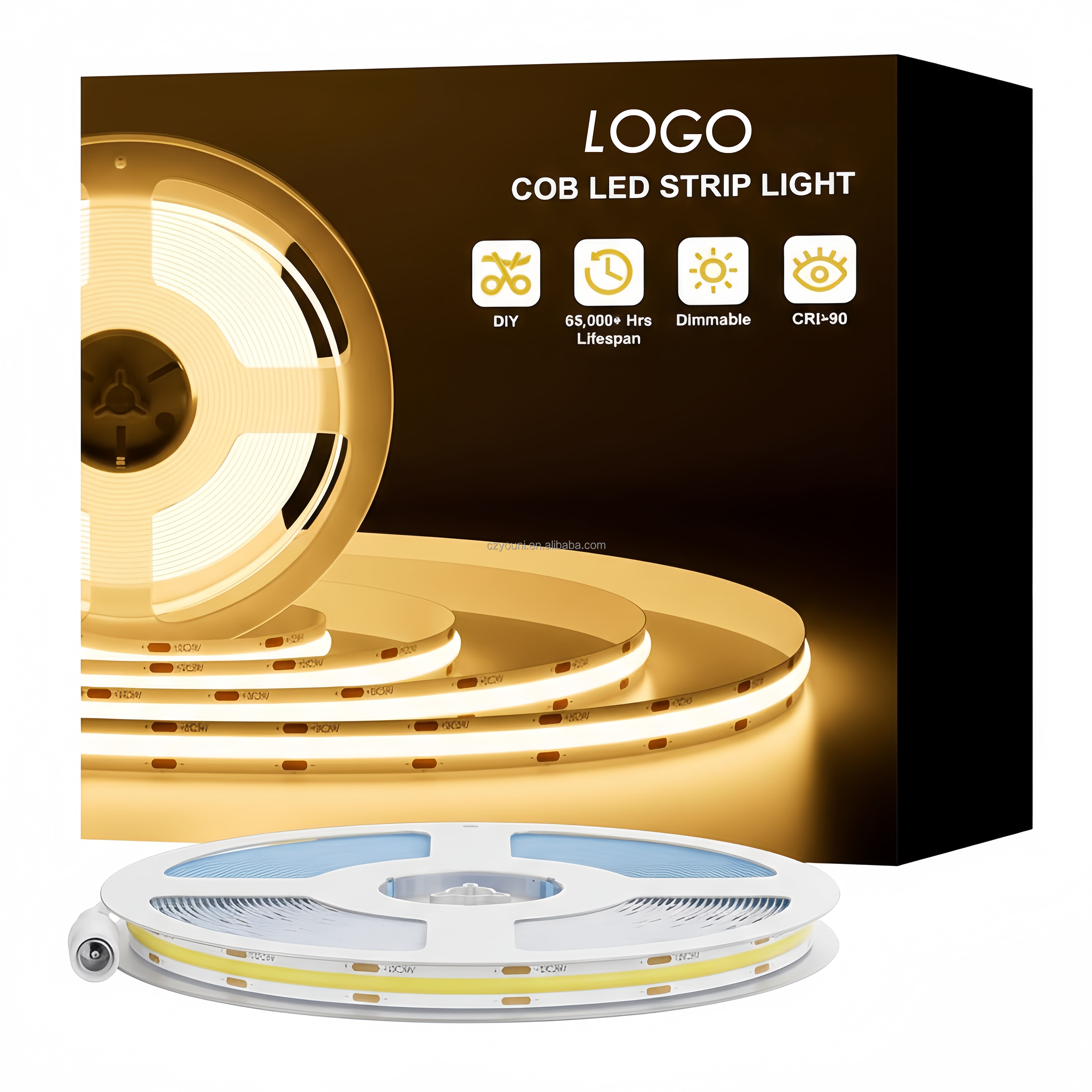
| Model | COB-24V-3000K-4000K-5000K | IP Rating | IP65 |
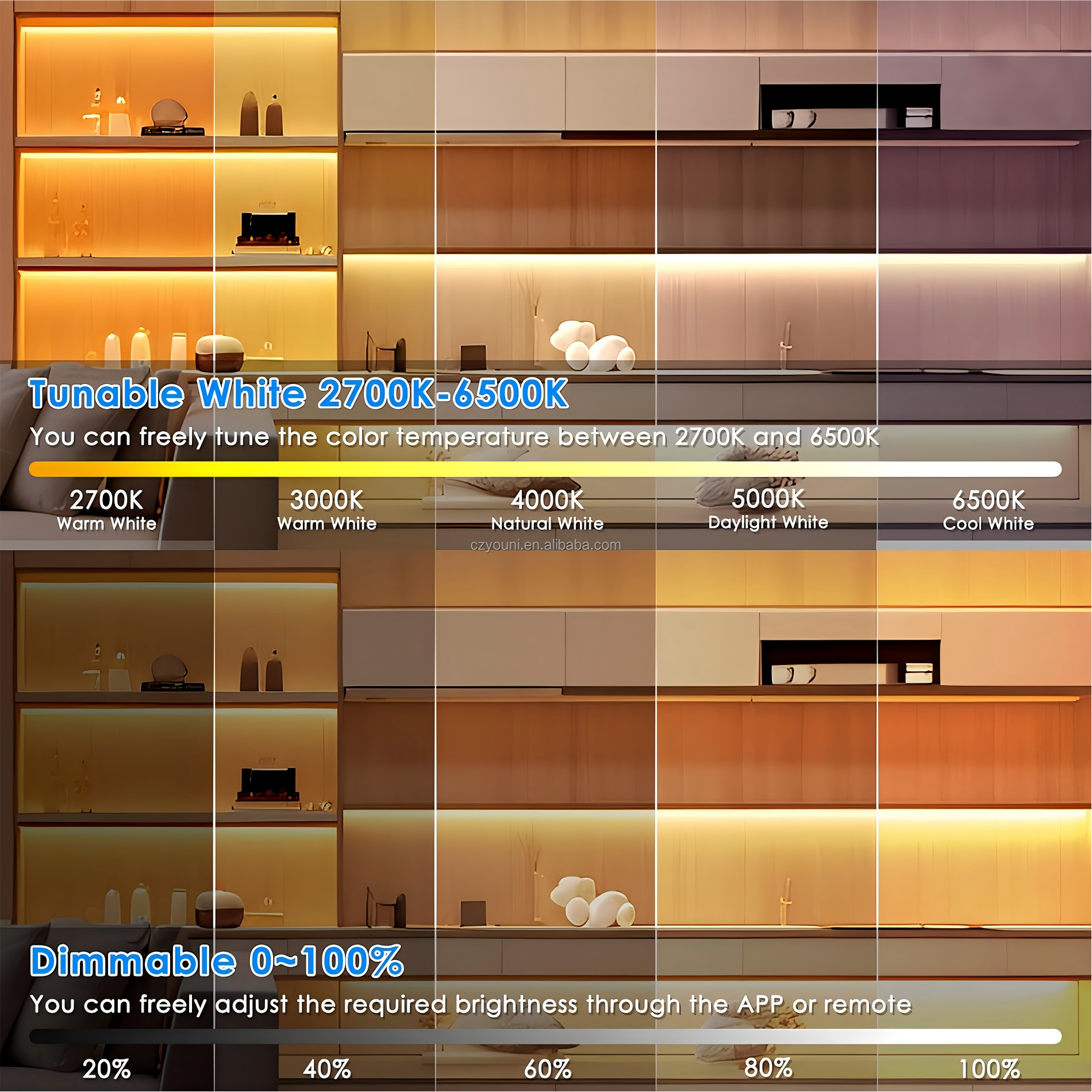
| Input voltage | 220V | CCT | 3000K,4000K,6000K |
| Lifespan | 50000 hours | Lamp body material | Copper |
| CRI | 80/90 | IP chip | Osram,Sanan,Cree |
| Working temperature | -20~60°C | Lm/w | 110 |
| Led source | Led | LM | 8800 |
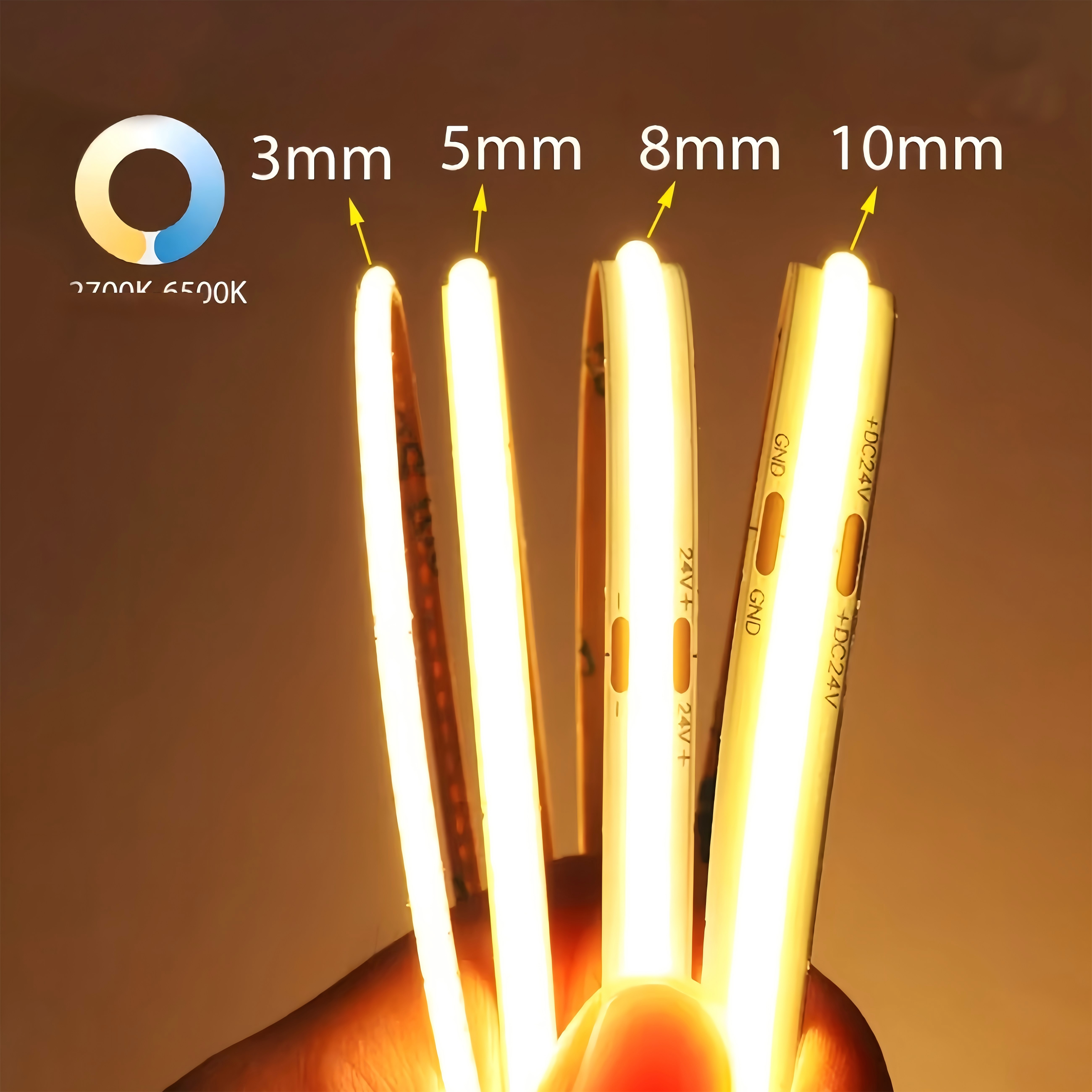
| PCB width | 8MM | Certificates | CE,LVD,EMC,RoHs.FC |
Q1: What are the differences between COB, SOB, and SMD?
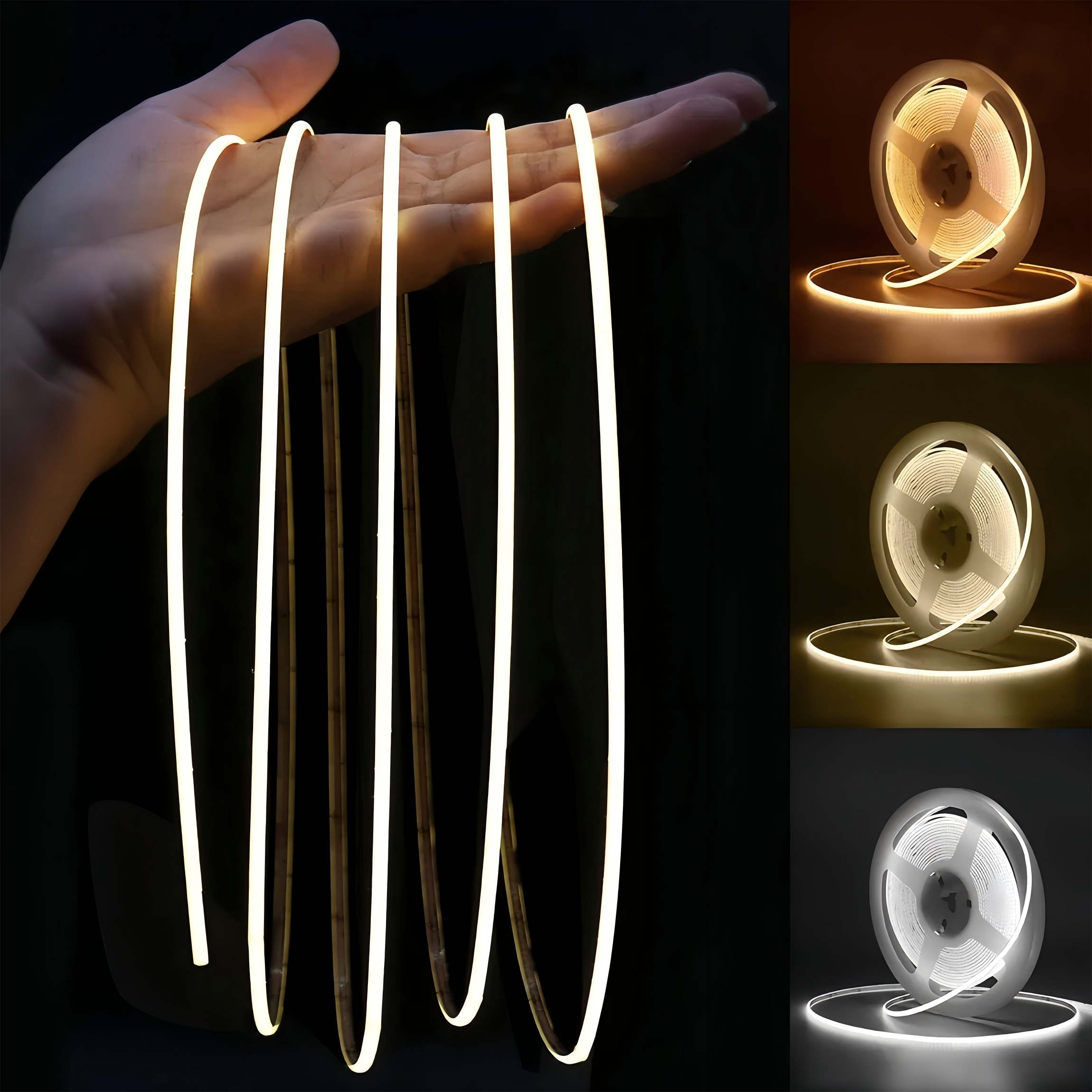
COB: Bare chip, no light spots, soft lighting; average heat dissipation, high voltage drop, low cost.
SOB: High-density SMD with thick silicone, no light spots, high brightness, waterproof (IP67), low voltage drop; relatively expensive.
SMD: Individual LEDs (2835/5050), granular appearance; inexpensive and easy to repair.
Q2: Should I choose 12V or 24V?
12V: Short distance (≤5 meters), home use, cabinets; higher voltage drop.
24V: Long distance (5–10 meters), outdoor, commercial applications; lower voltage drop, more stable.
Q3: How do I choose color temperature?
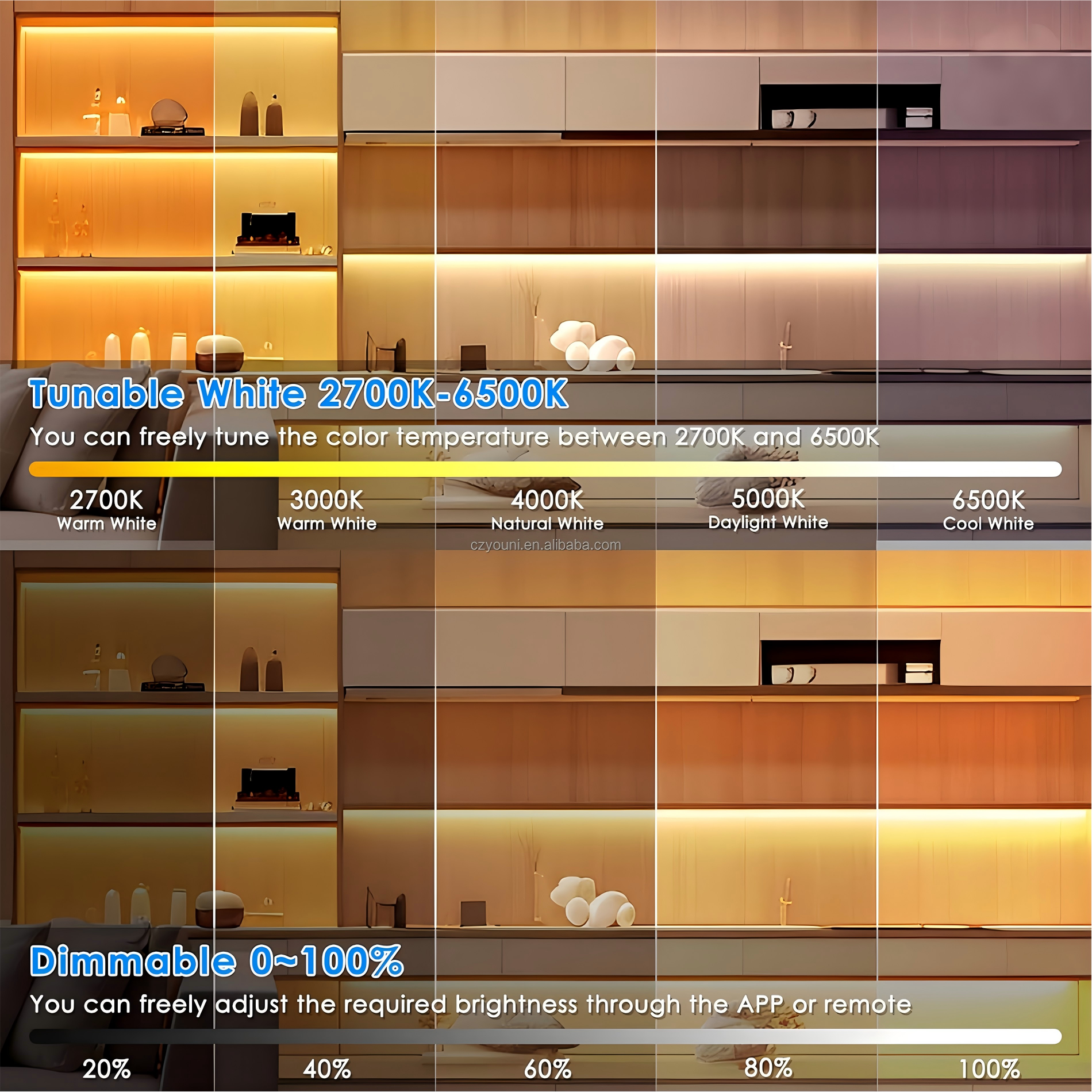
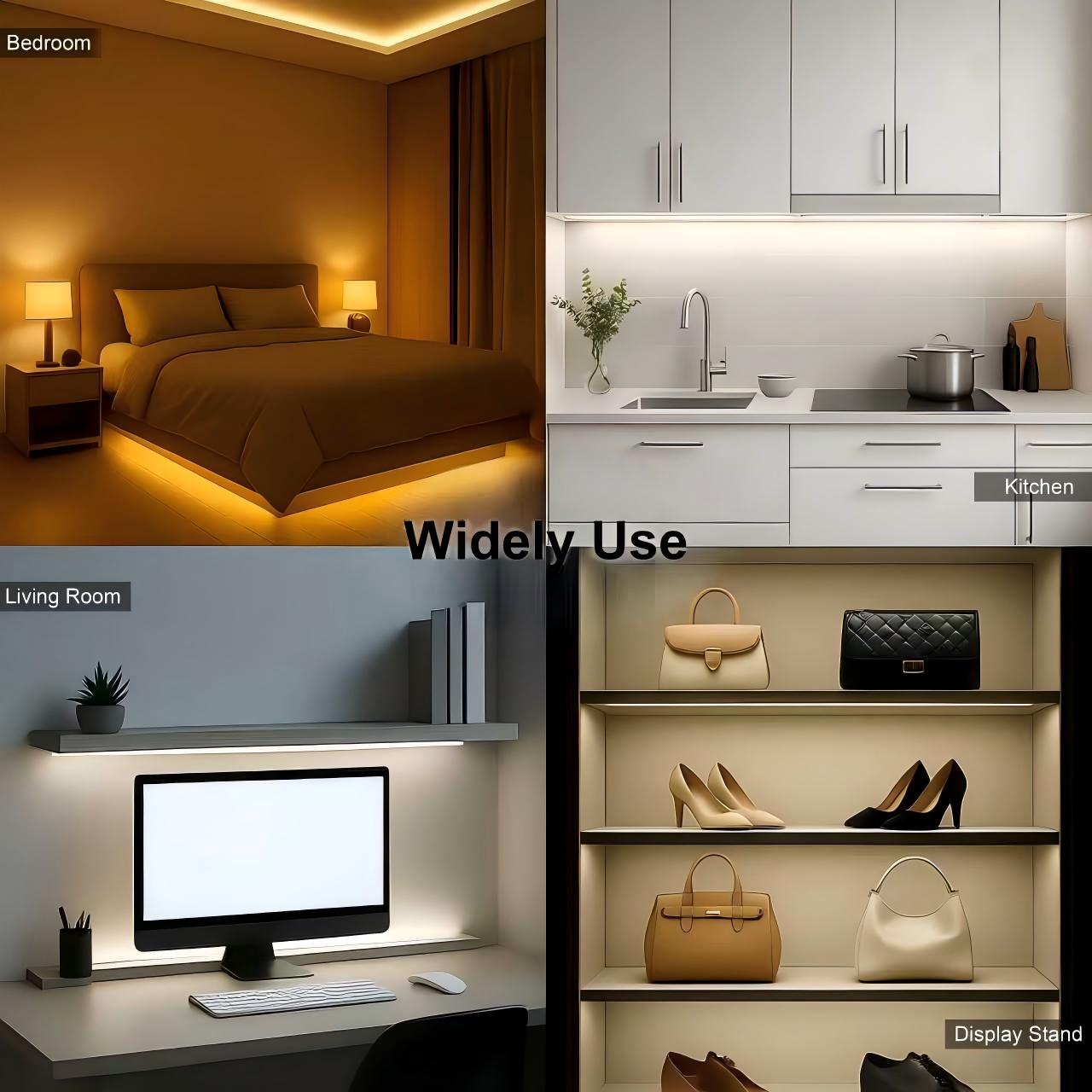
2700K–3000K: Warm white, cozy (bedrooms / ceilings).
4000K: Neutral white, natural (kitchens / entryways).
6000K: Pure white, bright (offices / outdoors).
Q4: What is CRI (Ra)?
Ra > 90: Suitable for homes and displays, accurate color rendering.
Ra < 80: Low quality, significant color distortion.
Q5: Can the low-voltage light strips be directly plugged into 220V?
❌ No! 12V/24V must be paired with a constant voltage power supply (transformer).
✅ 220V high-voltage light strips can be directly connected to the mains power, but the safety is poor and the cutting is limited.
Q6: How to configure the power supply?
Formula: Total power = Length × Power per meter (W/m).
Power supply power = Total power × 1.2–1.5 (leaving a margin).
Example: 5 meters × 12W/m = 60W → Choose a 75W power supply.
Q7: How long can the light strips be connected?
12V: ≤ 5 meters / strip, otherwise it will be dimmed in the front and bright in the back (voltage drop).
24V: ≤ 10 meters / strip; for long distances, power supply at both ends.
Q8: Can they be cut?
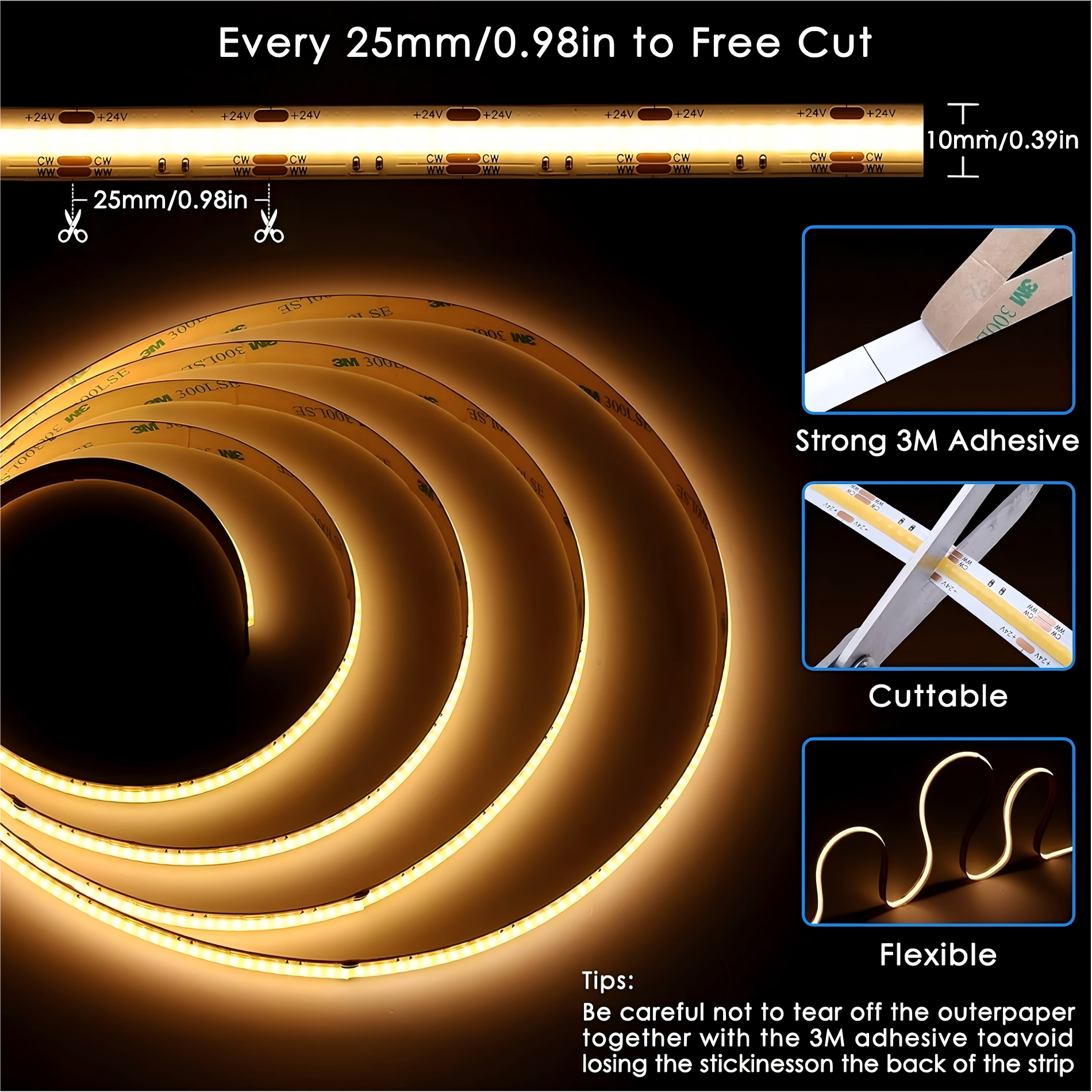
There are scissors marks every 3–6 light bulbs, and they can only be cut at the marked positions.
For waterproof models, after cutting, they need to be resealed; otherwise, water will enter and burn them.
Q9: What do IP20, IP44, and IP67 mean?
IP20: Indoor use, dust-proof but not water-proof.
IP44: Drip-proof, water-resistant (balcony / bathroom dry area).
IP67: Fully sealed with silicone, waterproof, dust-proof, and can be immersed (outdoor / swimming pool).
Q10: Can it be used outdoors?
Choose IP67 neon / SOB light strips, with waterproof sealant at the connectors to avoid direct sunlight and immersion.